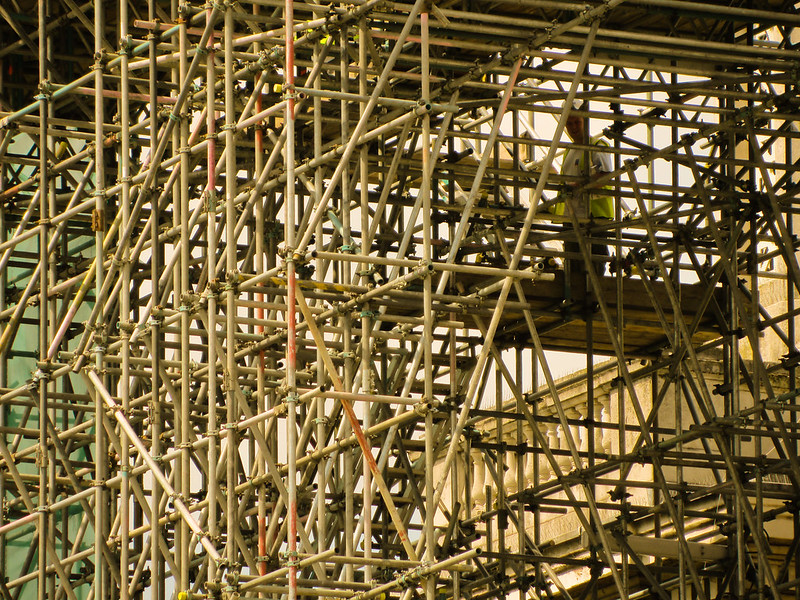
Scaffolding is a temporary structure used in construction, maintenance, repair, access, and inspection activities. It is made up of simple, repeating systems of tubes, joints, and boards that provide a safe working platform for workers. There are two main types of scaffolding:
- freestanding scaffolds
- independent tied scaffolds.
Putlog Scaffold
A freestanding scaffold, also known as an independent tower, is a self-supporting structure that does not require attachment to an adjacent structure. An example of this type of scaffold is the putlog scaffold, also known as a bricklayer’s scaffold. It consists of an outer row of vertical members (standards) joined together by ledgers and transverse transoms that are built into the brickwork bed joints as work proceeds. This type of scaffold is only suitable for new work in bricks or blocks.
Independent Tied Scaffold
An independent tied scaffold is a framework that is erected independent from the building but is tied to it at suitable intervals. This type of scaffold consists of two rows of standards, with each row being joined together by ledgers and supporting a transverse transom. The inner row should be set as close as is practical to the building, and a base plate is provided for each row of standards. An example of this type of scaffold is the independent tied scaffold.
Working Platform
A working platform is a closed-boarded or plated level surface from which work can be carried out. It must be of sufficient strength to support the loads of operatives and materials and provide a safe working space. All working platforms that are erected above ground level must be fitted with a toe board and guard rail.
Birdcage Scaffold
Another type of independent scaffold is the birdcage scaffold, which is typically used for interior work in large buildings such as halls, churches, and museums. It is generally only used for one level and provides easy access to ceilings and soffits. It consists of parallel rows of standards connected by ledgers in both directions and supporting a single working platform.
Slung Scaffold
A slung scaffold is a type of scaffold that is suspended from the main structure in one position using wire ropes or steel chains. It is similar to a birdcage scaffold but has the advantage of leaving a clear space beneath the platform. This makes it suitable for buildings such as theatres and cinemas that are to remain operational.
Suspended Scaffold
A suspended scaffold consists of a working platform that is suspended from the top of a structure by cantilever beams or outriggers. It allows for access for light maintenance work, window washing, and so on. High-rise buildings often have a permanent cradle system at roof level for this purpose.
Cantilever Scaffold
A cantilever scaffold is a type of independent scaffold that is erected on cantilever beams and secured to a building at only one end, leaving the other side hanging or exposed. This type of scaffold is efficient in providing access to areas that would be difficult or uneconomic to reach using a scaffold system erected from ground level. Workers operating on cantilever scaffold systems must be fitted with safety harnesses.
Mobile Scaffold
Finally, a mobile scaffold, also known as a mobile tower scaffold, is assembled from pre-formed framing components and fitted with wheels that allow it to be rolled from one place to another. It is typically used on sites where multiple areas require scaffolding, such as construction sites.
If you have any questions or would like a quote for your project – Peak Scaffolding Brighton regularly works with local businesses and homeowners in the Brighton & Hove area.
We offer free quotes and callouts. Sometimes we can even quote online. We will always offer professional, impartial advice.
Our friendly team can be reached by phone on 01273 092613 or at peakscaffoldingbrighton@gmail.com on email.