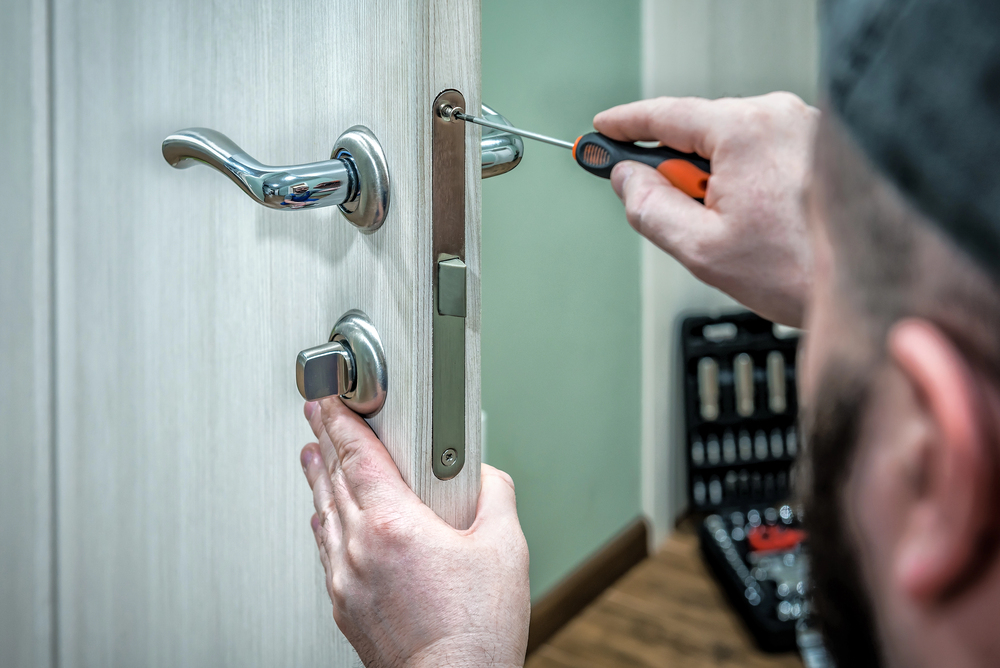
A front door that will not lock or a garden gate that refuses to close can appear to have an obvious solution: replace the lock. However, the locking mechanism is not always the underlying cause.
Misaligned doors, worn hinges and damaged metalwork can prevent an otherwise working lock from engaging properly. For homeowners in West Sussex, understanding the difference can help when explaining a fault to a tradesperson and deciding what kind of repair to seek.
Why doors and gates stop closing properly
Locks depend on the surrounding door or gate being correctly positioned. If the moving section no longer lines up with its frame or closing post, the latch or bolt may struggle to engage.
On a metal gate, possible causes include a worn hinge, a damaged welded connection or movement in the supporting post. On a household door, the problem may involve hinge alignment, the frame or the locking mechanism itself.
The symptoms can look similar. A key may become difficult to turn, the latch may catch against its receiving plate, or the door may need lifting before it will lock. Those symptoms do not, on their own, establish which component needs attention.
Repeatedly forcing a key or handle is unlikely to resolve the underlying issue and may damage the mechanism.
When locksmith work and metalwork overlap
Some repairs fall clearly within one trade. Replacing a faulty door cylinder is usually locksmith work, while repairing a fractured metal gate hinge may require welding or replacement metalwork.
Other jobs involve both.
A gate lock, for example, needs a sound mounting point and suitable alignment with the closing post. Fitting a new lock without addressing a dropped gate or damaged hinge may leave the original problem unresolved.
There are local businesses offering both types of work. One example is West Sussex Lock & Weld, whose website lists locksmith services alongside mobile welding, gate repairs and weld-on gate lock installation. This illustrates the overlap between locking hardware and the metal structure supporting it; it is not an independent assessment of the business’s workmanship.
Whether a combined service or separate specialists are appropriate will depend on the condition of the gate and the work required.
What homeowners can check safely
Before arranging a visit, a few observations can help describe the problem:
- Does the door or gate catch against the frame, post or ground?
- Is there visible damage around a hinge or welded joint?
- Has the problem developed gradually or appeared suddenly?
- Does locking require lifting, pushing or pulling the door or gate?
- Is the fault constant, or does it occur intermittently?
Photographs of the lock, hinges and affected area may also help a tradesperson understand what equipment or parts could be needed.
These checks should remain visual and non-invasive. Heavy or unstable gates should not be dismantled or lifted without appropriate support, and powered gates require particular care around their operating and safety systems.
Repair or replacement?
Replacing a lock may be appropriate when the mechanism is defective or a security change is needed. However, replacement alone will not correct a damaged hinge, unstable post or poorly aligned door.
Equally, repairing the surrounding structure will not restore a worn or broken locking mechanism. An assessment should consider both how the door or gate moves and how it locks.
Before agreeing to work, homeowners can ask what the proposed repair covers, whether parts are included and whether further faults could change the quoted cost. For welding work, access and nearby materials may also affect how the repair can be carried out safely.
The practical starting point is to identify the cause rather than assume every closing problem needs a new lock. Looking at the complete door or gate can help distinguish a straightforward hardware fault from a repair involving its supporting structure.